
SEO stands for search engine optimization. It is the process of making your website more visible in search engines like Google without paying for ads.
SEO is sometimes called SEO marketing, SEO optimization, or organic search marketing. It can help you earn organic (unpaid) rankings like this:
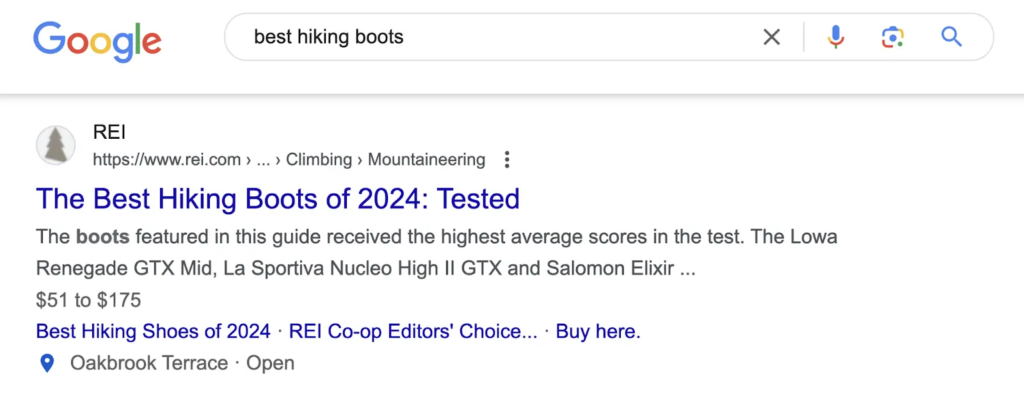
As a result, you can gain more brand awareness and traffic.
SEO involves making your site more appealing to both users and search engines.
The four main elements in a well-rounded SEO strategy are:
- Keyword Research: Finding out what your target audience searches for
- On-Page SEO: Optimizing webpages and their content
- Off-Page SEO: Getting other sites to link to your site, which can boost its reputation
- Technical SEO: Improving your site’s overall performance and accessibility
You will learn more about these elements later.
Search Engine Marketing vs. Search Engine Optimization
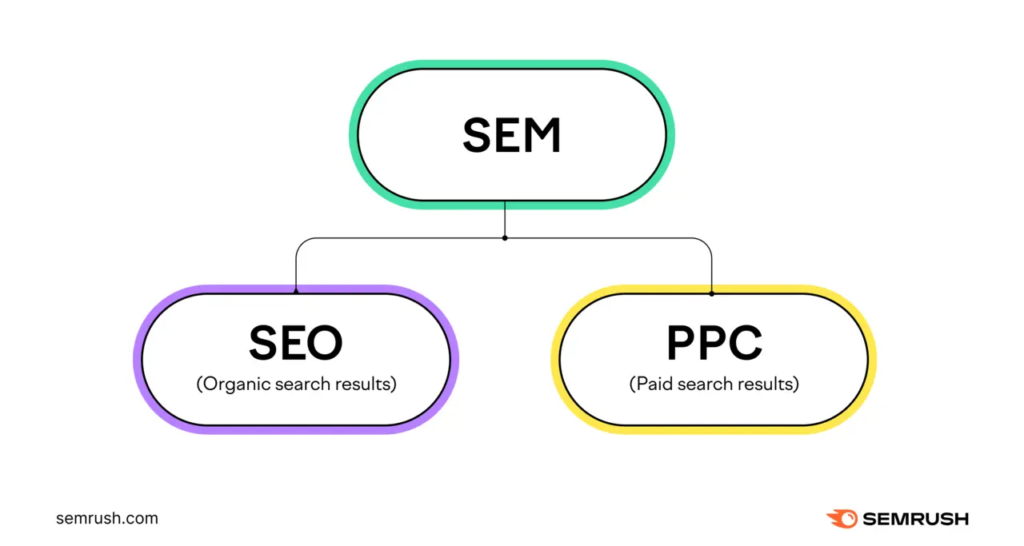
Search engine marketing (SEM) promotes a business through unpaid or paid results on search engines, often both.
- SEO is the subset of SEM that focuses on organic results. It generates traffic that you don’t have to pay the search engine for.
- Pay-per-click (PPC) marketing is the subset of SEM that focuses on sponsored (paid) results. It involves setting up ad campaigns, paying to run them, and generating traffic.
Paid results don’t always appear on search engine results pages (SERPs). When they do, they usually appear at the top with a “Sponsored” or “Ad” label.
Like this:
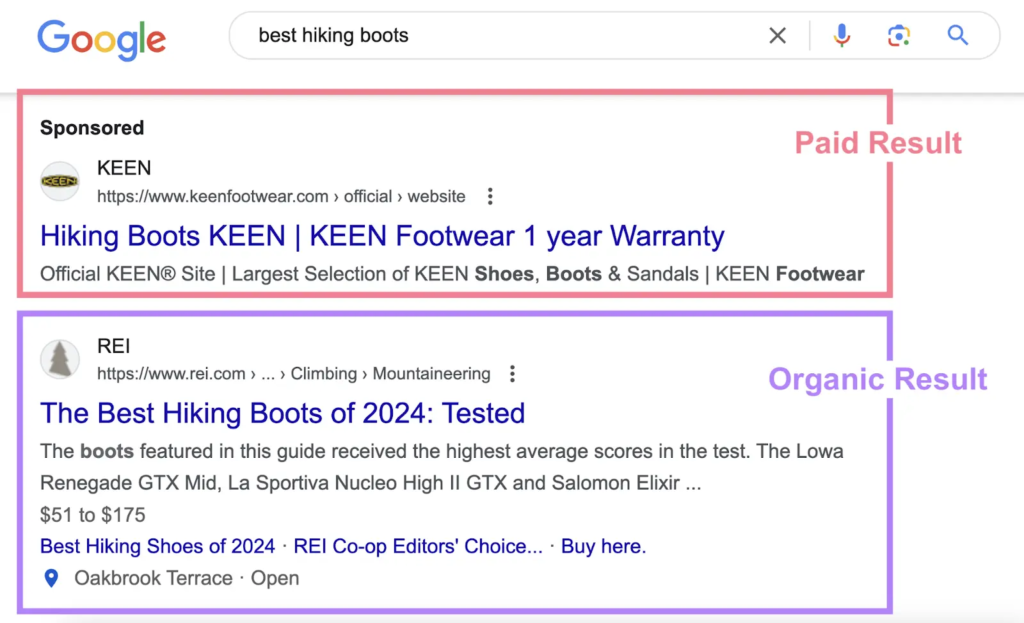
PPC can give you immediate visibility for high-value keywords, whereas SEO can take weeks or months to show results.
However, organic results tend to have higher click-through rates because users often trust them more than ads. Organic results can also generate sustained traffic at little to no ongoing cost.
Tip
Check out our dedicated guide to learn more about SEO vs. PPC.
Why Is SEO Important?
SEO is important in digital marketing because it helps you capitalize on the organic brand awareness and traffic that search engines generate.
For example, this brand’s SEO strategy yields around 7.4 million monthly visitors, according to Semrush’s Organic Research tool:
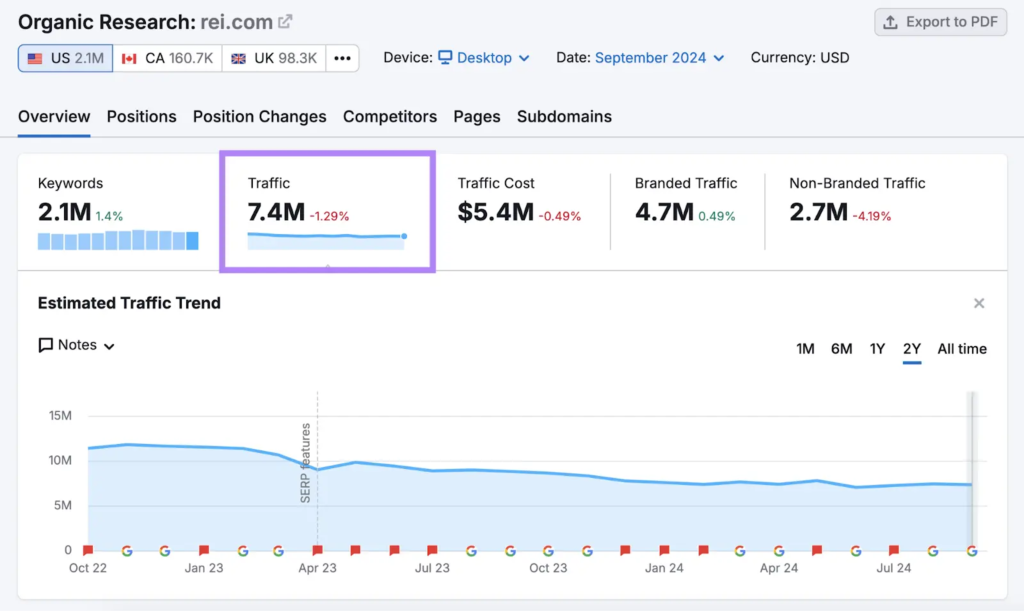
If you don’t use SEO, you’re unlikely to rank prominently for relevant terms. This limits your ability to reach new prospects and persuade them to convert.
Users will probably go to a competitor instead.
A higher ranking typically translates into more impressions and a better click-through rate.
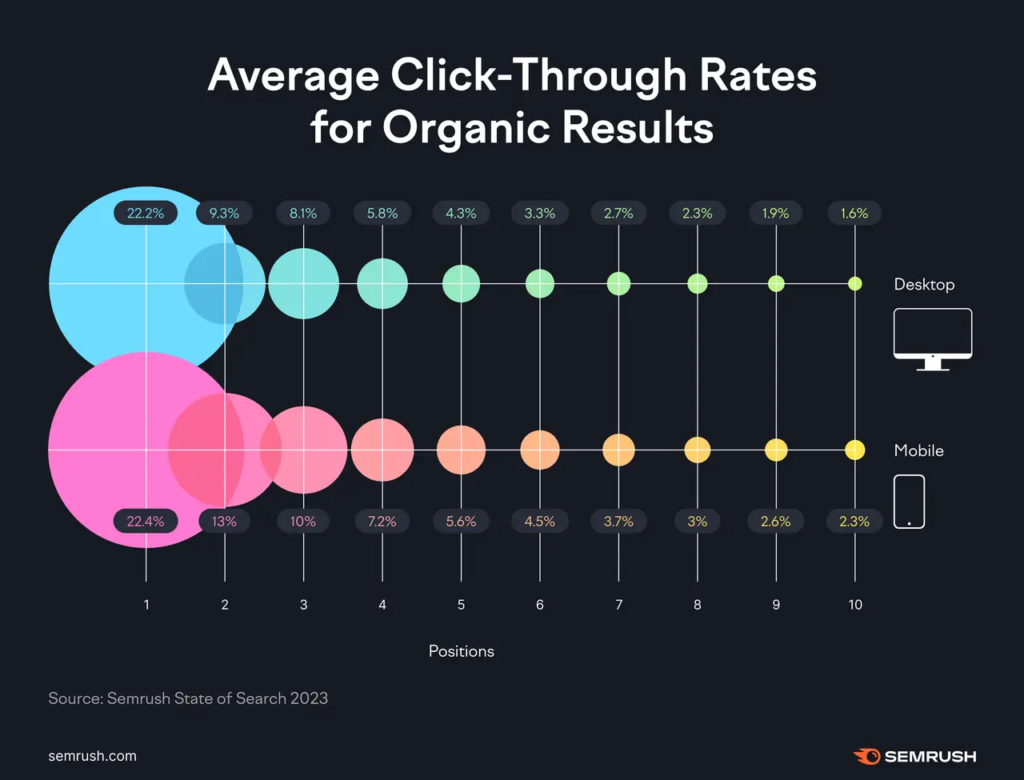
Since website SEO improves the user experience, it can also lead to better engagement and conversion rates, plus increased traffic from other sources—not just search engines.
Ultimately, SEO can deliver a good return on investment.
Try Semrush’s SEO Toolswith Your Free Account
How Does SEO Work?
SEO works by aligning your website with how search engines define good search results.
Search engines use complex processes and criteria to rank results, aiming to provide users with the best search experience.
By optimizing your website and content according to these systems, you can gain more visibility.
However, SEO is not a perfect science.
Search engines are somewhat secretive about the systems they use and constantly change them to improve search results.
Therefore, testing, analysis, and adaptation are crucial to SEO success.
How Do Search Engines Work?
Search engines work by crawling, indexing, and ranking content on the internet.
Here’s what each process involves:
- Crawling: Search engines use automated programs called bots or crawlers to explore the web and discover content. They primarily follow hyperlinks to find new pages.
- Indexing: After analyzing the content, the search engine determines if it’s eligible for indexing. If it is, the content is added to the database of possible search results.
- Ranking: When a user enters a query, the search engine tries to understand the search intent. It then uses a complex algorithm to present the best results from its index.

When your content appears in search results, it can take various forms, such as traditional search listings (the standard blue links).
Google also displays SERP features (non-standard results) to enhance the search experience.
For example, this SERP includes a popular products section:

The SERP also includes rich snippets, which are normal results with extra elements like images and star ratings:

Tip
Use the Semrush Sensor to check the prevalence of SERP features in your category and country.

Factors that influence your presence, positioning, and appearance on the SERP are known as ranking factors. They include:
- The relevancy and quality of your content
- The presence of keywords on your page
- The number and quality of links from other sites, which can boost your reputation
- How you use schema markup to help search engines understand and categorize information on your site
- The speed and usability of your site
Note
Google’s process for including and ranking paid results works differently. You can learn about it in our Google Ads guide.
Types of SEO
Here are some of the most important types of search engine optimization marketing:
On-Page SEO
On-page SEO is the process of optimizing webpages to improve their search visibility. It focuses largely on using keywords effectively.
Keywords are relevant search terms you want the page to rank for. They help show search engines and users that your content is relevant to their search.
Incorporating your keywords into the body content and the following locations when it is natural to do so is best practice:
- Title tag: The HTML page title that can appear in SERPs
- Meta description: The HTML page summary that can appear in SERPs
- H1 tag: The HTML element that contains the on-page title
- Subheading tags: HTML tags that contain subheadings (H2s, H3s, etc.)
- Alt text: HTML image descriptions
- URL slug: The unique part of the webpage address
Avoiding keyword stuffing—forcing in keywords where they do not belong—is also important because Google considers this a spammy practice. Violating Google’s spam policies can lead to a penalty that harms your search visibility.
Tip
Use Semrush’s On Page SEO Checker to get on-page SEO recommendations tailored to your site.

Try Semrush’s SEO Toolswith Your Free Account
Off-Page SEO
Off-page SEO refers to actions you can take outside of your website to improve its search visibility.
It most commonly involves link building, which is the process of getting other high-quality websites to link to your website.
These links are called backlinks, and they can help your SEO by signaling that your website is useful and trustworthy.

Other off-page tactics like social media management, online reputation management, and email marketing can indirectly benefit your SEO by driving brand awareness and engagement.
Tip
Use Semrush’s Link Building Tool to start building quality backlinks.
Technical SEO
Technical SEO involves improving the technical aspects of your website to enhance its search visibility.
Ensuring that search engines can crawl and index your website properly is the most important aspect of technical SEO. This may involve:
- Using meta robots tags and robots.txt to control the behavior of search engine bots
- Creating an XML sitemap to help search engines understand your site structure
Building internal links to assist search bots and users in navigating your site